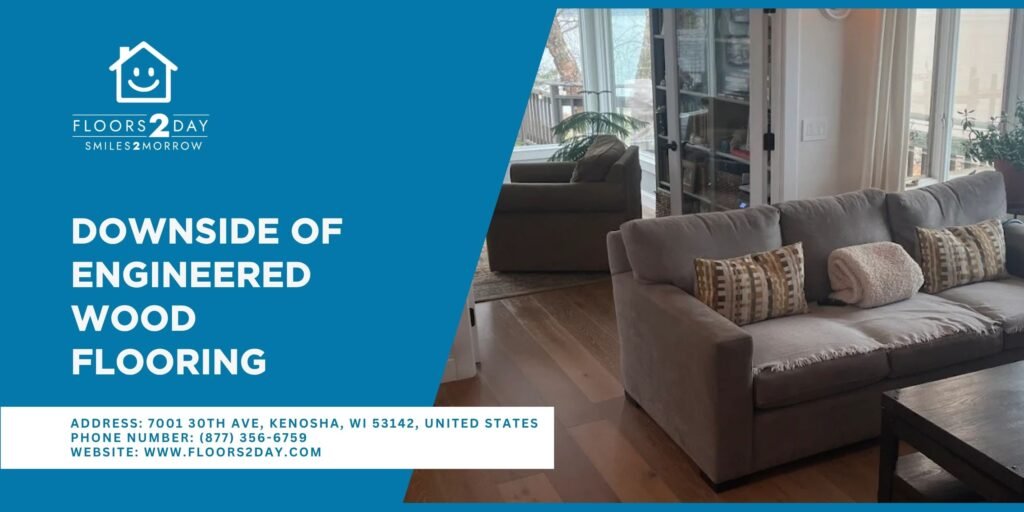
When it comes to choosing new floors, many homeowners ask: “What are the downsides of engineered wood flooring?”
One of the Hardwood flooring types, Engineered wood is best known for its authentic wood appearance and structural stability. However, it has its trade-offs. At Floors2Day, we give customers honest insights before they buy. That’s why our co-owner Joe shares the real pros and cons of engineered wood and where it makes the most sense to use it.
Joe’s take: Paying Premium for a Compressed Wood Board
“The negative of engineered flooring is you’re paying top dollar for a compressed wood board. You’re going to get a thin veneer on the surface of an engineered floor.”
Engineered wood looks like solid hardwood on the surface, but beneath that thin layer of real wood (called a veneer) is a base made from layers of plywood or fiberboard.
The layered structure adds stability in areas prone to moisture or temperature changes. However, it also limits how much you can refinish the floor over time. Joe notes you’re often paying a premium price for less long-term flexibility.
That doesn’t mean it’s a bad product. It just needs to be used in the right environment.
Limited Refinishing and Durability
Unfortunately, engineered wood can’t be refinished as many times as solid hardwood. The veneer is usually less than 4mm thick, which means sanding and refinishing more than once could expose the layers underneath.
You also have to consider durability in floors. Joe explains that engineered wood floors are made from real wood, but tend to scratch and scuffs more easily than other modern alternatives:
“They do tend to scratch and get beat up a little more than a laminate or LVP.”
For families with pets or heavy foot traffic, scratches can add up over time. In contrast, laminate or luxury vinyl plank (LVP) floors are designed with protective wear layers that can resist damage from claws, toys and furniture movement.
Where Engineered Wood Works Best (and Why)
“If somebody wants a real wood look or they’re wanting it below-grade, meaning in a basement or they’re going over concrete, we can put in an engineered floor. They look beautiful.”
Despite its limitations, engineered wood has its place. It’s ideal for areas where solid hardwood isn’t practical such as:
- Basements or lower levels with higher humidity
- Condos or high-rise units built over concrete subfloors
- Homes with radiant heat systems since it tolerates temperature fluctuations better
Engineered wood can be glued directly to concrete. This opens up design possibilities in spaces where hardwood installation wouldn’t be possible.
Appearance and Installation: The Upside to the Downside
While engineered wood isn’t as durable as LVP or laminate, it comes out on top for authenticity and aesthetic appeal. Each board is topped with a real wood veneer, rather than a printed image. Because of this, your floors capture the same texture, grain, and warmth as solid hardwood.
When you ask Floors2Day’s flooring installers to install your engineered wood floors, they will look clean and high-end. It’s an excellent way to add elegance to condos, finished spaces, or other spots where design comes first.
Joe’s Final Thoughts: Based on Lifestyle and Space
“Great product, it has instances where it’s the right product, especially if somebody’s in a high-rise and they want a real wood look over a concrete subfloor.”
Joe’s perspective is clear: engineered wood flooring is not a bad product, it’s just not right for everyone.
It’s ideal for homeowners who want the look and feel of hardwood, but need something that works over concrete or in moisture-prone areas. Families with pets, kids, or heavy foot traffic might benefit more from the long-term durability and easier maintenance of LVP or laminate.
Experience Floors2Day’s Shop-at-Home Service
At Floors2Day, we bring flooring samples directly to your home so you can see how they look under your lighting and next to your furniture. Whether you’re comparing engineered wood, laminate or LVP, our team will help you find the best match for your lifestyle and space.
Contact us to schedule your in-home consultation or get new hardwood flooring by visiting our: