Installing carpet yourself is harder than most homeowners expect. Single rectangular rooms with no stairs are reasonable DIY projects for handy homeowners with the right tools and a free weekend. Whole house installations, stair installations, and projects involving patterned carpet are usually better handled by professional carpet installers because the consequences of mistakes are expensive to fix. The realistic savings for DIY range from 1,000 to 2,500 dollars on a typical residential carpet installation, but those savings disappear quickly if you have to hire carpet installers to fix a failed attempt.
The Honest Difficulty Breakdown
Different parts of the carpet fitting process carry different difficulty levels. Knowing which parts trip up DIY installers helps you make a realistic decision about whether to take on the project yourself.
| Task | Difficulty | What to Expect |
| Removing old carpet | Easy | Physical labor but no real skill required. |
| Basic subfloor preparation | Easy to moderate | Manageable for most handy homeowners. |
| Installing tack strips | Moderate | Specific spacing matters, but the technique is teachable. |
| Laying padding | Easy | Cut, position, staple, and tape. Forgiving work. |
| Cutting carpet to size | Moderate | Measurement errors waste expensive material. |
| Power stretching | Hard | Requires specific tools, technique, and significant physical effort. |
| Seaming pieces together | Hard | Bad seams are visible and worsen over time. |
| Stair installation | Very hard | Almost always recommended for professional carpet installers only. |
| Transitions to other flooring | Moderate to hard | Each transition type has its own technique. |
| Finishing at walls and edges | Moderate | The detail work that separates DIY from professional appearance. |
When DIY Makes Sense and When It Doesn’t
Some projects are appropriate for DIY carpet installation and others are not. This table summarizes the patterns.
| Project Type | DIY Difficulty | Recommended Approach |
| Single rectangular bedroom under 200 sq ft | Moderate | Reasonable DIY project for handy homeowners |
| Whole house residential carpet installation | Hard | Hire professional carpet installers |
| Stair installation (any number of stairs) | Very hard | Always use experienced carpet fitters |
| Patterned or striped carpet | Very hard | Use professional carpet installation services |
| Basement with concrete subfloor | Hard | Carpet contractor or professional flooring installer recommended |
| Apartment or small condo single room | Moderate | DIY feasible with proper tools and time |
| Commercial carpet installation | Very hard | Always hire commercial carpet installers |
| Berber or loop pile carpet | Very hard | Use experienced carpet installers |
| Wool or premium fiber carpet | Very hard | Required to use approved flooring installation company |
The Complete Guide to DIY Carpet Installation
The quick reference above covers the essentials. The rest of this article walks through what DIY carpet installation actually involves, where homeowners commonly succeed and fail, what tools and materials you will need, and how to honestly evaluate whether your specific project is a reasonable candidate for self carpet installation or better suited to professional carpet installers.
Why This Question Deserves a Careful Answer
Carpet installation looks deceptively simple from the outside. The carpet rolls out, gets stretched to the walls, and gets secured along the edges. That basic description hides almost everything that actually matters in producing an installation that looks professional and lasts ten to fifteen years. The difference between a good carpet fitting and a poor one shows up in details that take years of practice to master and tools that most homeowners do not own.
Most DIY carpet installation failures do not show up immediately. The carpet looks acceptable on flooring installation day, the homeowner enjoys their cost savings, and everything seems fine. Six to twelve months later, ripples appear in the walkways, seams start to lift, and edges pull away from the walls. The fix requires hiring carpet installers anyway, often at higher cost than the original professional carpet installation would have been because corrective work is more complex than fresh carpet installation. The savings vanish entirely and the homeowner has spent a weekend doing work they then paid someone else to redo.
None of this means DIY is impossible. Plenty of homeowners successfully install their own carpet, particularly for smaller projects and simpler spaces. The honest answer about difficulty depends entirely on the specific project, the homeowner’s skill level, the tools available, and the consequences of a less than perfect outcome. This article walks through each of those factors so you can make a realistic decision rather than relying on optimistic YouTube videos or pessimistic warnings from people trying to sell you carpet installation services.
What Carpet Installation Actually Involves
Before evaluating whether DIY is right for your project, it helps to understand what the work actually includes. Many homeowners think of carpet installation as a single task when it is actually a sequence of related tasks, each with its own skill requirements and failure modes.
The work begins well before any carpet enters the room. The existing flooring has to be removed, including the old carpet, padding, tack strips, and any staples left behind. Subfloor inspection follows, since covering damaged or uneven subfloor produces guaranteed problems later. Repairs and preparation happen next, including filling low spots, securing loose sheathing, addressing squeaks, and resetting any protruding fasteners flush with the surface.
Once the subfloor is ready, new tack strips get installed around the perimeter of each room with specific spacing from the walls. Padding gets cut, fitted, stapled to the subfloor, and seamed with tape along its own joints. The carpet itself is cut to size with allowance for stretching, positioned in the room, hooked onto the tack strips along one wall, and then power stretched across the room to attach to the opposite tack strips. Seams between pieces are constructed using hot melt seam tape and a specialized heated iron. Final trimming at walls, transitions to other flooring, and finishing details complete the project.
Each of these steps has its own technique, its own failure modes, and its own quality standards. Professional carpet installers have done thousands of these steps and know what good work looks like at each stage. First time DIY carpet installers are learning as they go, which is fine for some steps and dangerous for others. Understanding which steps are forgiving and which are unforgiving is the key to deciding whether your specific project is appropriate for self carpet installation.
The Tools You Will Need for Carpet Installation & What They Cost
The right tools are not optional for carpet installation. Trying to do this work with substitutes for the proper tools is the single most common cause of DIY failure. Here is what the job actually requires and where you can source it.
Power stretcher
The power stretcher is the most important tool in the carpet installation process and the one DIY installers most commonly try to skip. The stretcher uses leverage to apply hundreds of pounds of tension to the carpet across the room, which is what keeps the installation flat and ripple free for years. Knee kickers alone cannot generate this tension across spans of more than a few feet. Power stretcher rentals run roughly 25 to 50 dollars per day from major home improvement stores, which is trivial compared to the cost of failure.
Knee kicker
The knee kicker is a smaller stretching tool used for hooking carpet onto tack strips and for short distance stretching where the power stretcher does not fit. It works by transferring force from your knee through a striking plate into the carpet. Most carpet fitters use both tools together. Knee kicker rentals are usually included with power stretcher rentals or available for 15 to 25 dollars per day separately.
Seaming iron and seam tape
Hot melt seam tape and a specialized heated iron are required for joining pieces of carpet together at seams. The iron heats the tape, which bonds to both carpet backings as it cools. Seaming is one of the harder parts of carpet installation for DIY installers, and poor seams are immediately visible. Seaming iron rentals run 25 to 40 dollars per day, and you will need to buy enough seam tape to cover your planned seam length.
Carpet knife or trimmer
Cutting carpet requires either a sharp utility knife with plenty of replacement blades or a specialized wall trimmer that cuts at precise angles relative to the floor. Wall trimmers produce cleaner cuts at the walls than utility knives but cost more to rent. Plan to replace utility knife blades frequently, since dull blades produce ragged cuts that look amateur and can damage the carpet backing.
Other necessary tools
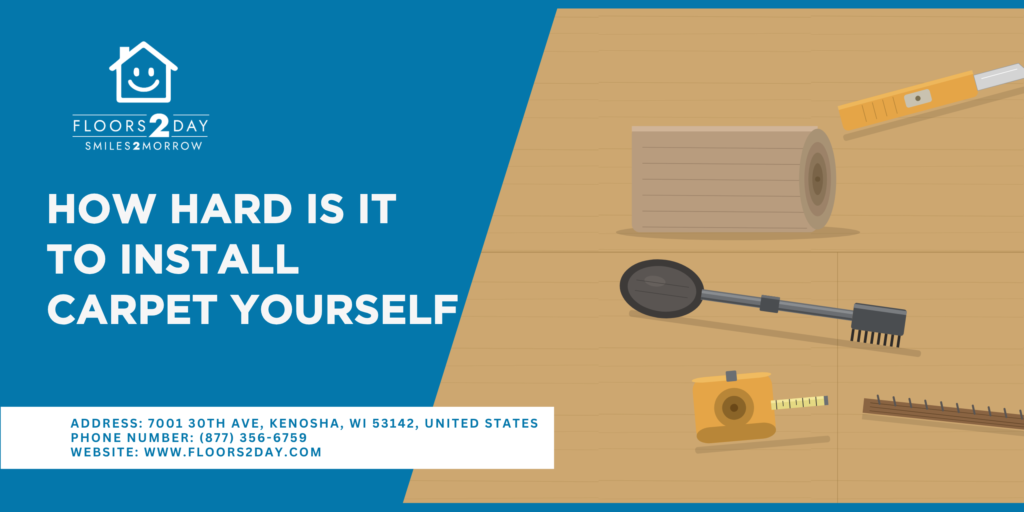
Beyond the major specialty tools, you will need a row finder for separating tufts during cutting and seaming, a stair tool if your project includes stairs, a hammer, a sturdy tape measure, a chalk line, a straightedge for guiding cuts, work gloves, and high quality knee pads. The knee pads are not optional. You will spend hours on your knees and inadequate padding leads to injury that can compromise the rest of the project. Plan to spend 40 to 60 dollars on the smaller tools if you do not already own them.
Total tool cost
Renting the full kit for a weekend carpet installation typically runs 150 to 250 dollars including the major specialty tools, the smaller tools you may need to buy outright, and the seam tape and other consumables. This represents real money but is small compared to the labor savings on a whole house project. Buying all the tools to own outright would run 800 to 1,500 dollars, which makes sense only if you plan to install carpets in multiple rooms over time or have other carpet projects in your future.
The Materials Beyond the Carpet Itself
Most DIY budgets focus on the carpet cost and underestimate the materials beyond the carpet. Each of these materials has its own quality variations and selection considerations.
Carpet padding is required under almost all residential carpet installation projects, with the specific type depending on your carpet and use case. Rebond foam padding is standard for most residential applications and runs 50 cents to a dollar fifty per square foot. Moisture barrier padding for basements costs more. Memory foam premium padding for added comfort costs more still. The padding choice affects both comfort and warranty coverage, so verify your selection matches the carpet manufacturer requirements.
Tack strips are thin wooden strips with hundreds of angled nails or pins that grip the carpet backing along the perimeter of each room. Standard tack strips for wood subfloors run about 50 cents per linear foot. Concrete tack strips for basement and slab applications cost slightly more and may require concrete adhesive in addition to the strips themselves. You will need enough tack strip to run around the full perimeter of every carpeted room, minus doorways and other transitions.
Seam tape is required wherever two pieces of carpet meet. Standard hot melt seam tape costs about a dollar per linear foot. Buy more than you think you need, since seam tape is one of the materials DIY installers most commonly run out of mid project. Transition strips for doorways and other transitions between flooring types cost 10 to 30 dollars per transition depending on the style and material. Quality transition strips look noticeably better than the basic builder grade options that come standard in most quotes.
The Hard Parts Where DIY Carpet Installations Fail
Several specific parts of the carpet installation process are where DIY projects most commonly go wrong. Understanding these failure points helps you decide which projects are reasonable to attempt and which are better handled by professional carpet installers.
Inadequate carpet stretching
This is by far the most common DIY failure and the source of nearly all visible problems that develop in the first year after a self-installed carpet. Carpet that is not stretched tight enough during installation develops ripples and waves as the fibers settle, the backing relaxes, and foot traffic creates uneven tension patterns. The visible ripples form in walkways first and spread from there. Once they develop, the only fix is restretching the carpet, which requires removing furniture, hiring carpet installers, and paying for corrective work that often costs more than the original DIY savings.
The reason this failure happens so consistently is that proper stretching requires more force than most people expect. Professional carpet installers use power stretchers because human leg power alone cannot generate sufficient tension across rooms larger than a closet. DIY carpet installers who try to skip the power stretcher and rely on knee kickers alone are essentially guaranteeing this problem will develop, regardless of how careful they are with other parts of the carpet installation.
Poor seam construction
Seams are where DIY carpet installation visibly differs from professional work. A skilled carpet installer using hot melt seam tape and a proper seaming iron produces seams that essentially disappear in the finished installation. First time DIY installers commonly produce seams with visible bumps where the carpet edges did not align properly, gaps that open over time as the carpet shifts, fraying at the seam edge from imprecise cutting, or fiber discoloration along the heat line from improperly used seaming irons.
Seam construction is also where carpet pattern matters dramatically. Solid color carpets are forgiving and hide minor seam issues. Patterned carpets, including stripes and any printed designs, require precise pattern matching at seams that takes real practice to execute well. Patterned carpet projects are not appropriate for first time DIY installation regardless of how careful you plan to be.
Tack strip installation errors
Tack strips must be installed at a specific distance from the wall, usually about two thirds of the carpet thickness, with the pins angled toward the wall to grip the carpet when it is stretched into position. DIY installers commonly place tack strips either too close to the wall, which makes proper carpet finishing impossible, or too far from the wall, which creates a visible gap between the carpet edge and the wall when the carpet is stretched. Either error becomes obvious in the finished installation and is difficult to correct without restarting the affected sections.
Subfloor preparation shortcuts
DIY carpet installers often underestimate subfloor preparation because the work happens out of sight under the new carpet. Squeaks left unaddressed, damaged sheathing left in place, uneven sections not leveled, and protruding fasteners not reset all create problems that become visible through the finished carpet over time. The new carpet rolls down looking acceptable, but within months the underlying problems start producing visible symptoms that look like installation defects but actually trace to skipped prep work.
Stair installation attempts
Stairs are the single most challenging part of any residential carpet installation, and they are where DIY projects most catastrophically fail. Properly installed carpet on stairs requires precise measurement of each tread and riser, careful pattern matching if applicable, secure attachment to prevent slipping, and finishing details that are difficult to execute even for experienced carpet fitters. Bad stair carpet is also a genuine safety hazard. Loose carpet on stairs can shift underfoot, edges that lift can catch toes, and improperly secured carpet can detach entirely under foot traffic. Even capable DIY installers should generally hire professional carpet installers for stair work specifically, even if they handle the flat areas themselves.
How Long DIY Carpet Installation Actually Takes
The honest time investment for DIY carpet installation is significantly more than YouTube videos and instructional content suggest. Knowing the realistic timeline helps you decide whether the project fits your available time and energy.
A single average sized bedroom of roughly 150 square feet typically takes a first time DIY installer 6 to 10 hours to complete properly, including subfloor preparation, tack strip installation, padding, carpet cutting, stretching, seaming if needed, and finishing details. Professional carpet installers complete the same room in 2 to 3 hours because of practice, better tools, and crew coordination. The time gap reflects real skill differences, not effort differences.
Whole house DIY carpet installation typically requires an entire weekend at minimum for a small home, often stretching across multiple weekends for larger homes or for flooring installers learning as they go. Plan conservatively and double whatever timeline seems reasonable to you initially. The work is physically demanding, requires sustained focus, and gets harder as you fatigue. Rushing through the later stages because you are tired is one of the common ways DIY projects produce quality problems.
Time considerations matter for another reason worth mentioning. Many homeowners value their weekends and personal time substantially, often at higher implicit rates than they realize. If a DIY whole house carpet installation saves 2,000 dollars but costs you 25 hours of weekend time you would have spent with family or on other activities you enjoy, the real savings rate is 80 dollars per hour. That may or may not justify the work depending on what those hours are worth to you specifically.
Cost Comparison Between DIY and Professional Installation
The cost comparison between DIY and professional carpet installation services is more nuanced than a simple labor savings calculation. Several factors affect the real economics of the decision.
Professional carpet installation in Kenosha typically runs 3 to 7 dollars per square foot for labor, with the carpet and padding adding 2 to 6 dollars per square foot for midrange products. A whole house residential carpet installation of roughly 1,500 to 2,500 square feet through a reputable carpet contractor typically lands between 5,000 and 8,000 dollars total including everything. DIY for the same project would run 3,000 to 5,000 dollars in materials and tool rentals, producing nominal savings of 1,500 to 3,000 dollars.
Several factors erode those nominal savings. Material waste from cutting mistakes can add several hundred dollars to the carpet cost, since DIY installers commonly waste more material than experienced carpet installers. Tool rental costs add 150 to 250 dollars for the weekend. Mistakes that require professional correction add the cost of hiring carpet installers anyway. The value of your weekend time, whatever you assign it, comes out of the savings. And carpet manufacturer warranty implications can void coverage worth thousands of dollars over the life of the carpet if you go the DIY route on products that require certified installation.
After accounting for these factors realistically, the true financial savings for most DIY whole house carpet installation projects range from 1,000 to 2,500 dollars rather than the initial 1,500 to 3,000 dollar nominal figure. For smaller projects, the savings are proportionally smaller. A single bedroom DIY carpet installation might save 200 to 500 dollars compared to hiring affordable carpet installers, which is meaningful money but may not justify the time and risk involved.
Where to Find Quality Carpet Installers if You Decide to Hire
If your project evaluation points toward hiring help rather than DIY, knowing how to find quality carpet installers in your area matters. Not all carpet installation companies operate to the same standards, and the wrong choice can produce worse results than careful DIY work would have.
Search for local carpet installers through several channels rather than relying on a single source. Online searches for carpet installers near me or carpet laying services in your area will produce a mix of established companies and lead generation services. Local flooring retailers usually maintain their own installation teams or partner with vetted carpet installation contractors. Recommendations from neighbors, real estate agents, and home services professionals provide context that online searches do not. Trade organization directories like the Certified Flooring Installers organization let you find credentialed installers verified through independent testing.
When evaluating local carpet installers, prioritize verifiable credentials over advertising claims. Licensed carpet installers with current insurance, recent local references, written quotes, and clear warranty terms produce dramatically better outcomes than installers chosen primarily on price. The cheapest quote frequently reflects corners being cut on materials, labor, or warranty coverage that show up later as problems. The best carpet installers in any market typically price competitively but not at the bottom of the range, because quality work has real costs that responsible operators do not absorb.
We, Floors2day, is a flooring company providing professional flooring installations in Kenosha, Wisconsin’s Southeastern and Northern Illinois. If you are in these areas feel free to contact us for your carpet installation and we will be there to assist you.
Same day carpet installation is occasionally available for small projects and stock products, but it should not be the primary selection criterion. Quality installations require proper assessment, material preparation, and scheduling. Same day services suggest either an installer with unusual capacity or one cutting corners on the preparation steps that determine long term quality. Use same day options for genuine emergencies, but plan ahead for standard residential or commercial carpet installation projects.
Residential vs Commercial Carpet Installation
This article focuses on residential carpet installation, but it is worth mentioning how commercial carpet installation differs because some homeowners encounter commercial products in home settings like home offices and finished basements.
Commercial carpet installation typically involves different products, different installation methods, and different durability requirements than residential work. Carpet tiles and modular carpet dominate commercial installations because of their durability under heavy traffic and the ability to replace individual sections. Glue down installation is more common in commercial settings than the stretch and tack methods used residentially. Commercial carpet installers specialize in these methods and may not be the best choice for residential work, just as residential installers may not be the best fit for commercial projects.
If you are installing carpet in a home office, finished basement workspace, or other home setting where commercial style products might fit, discuss the application with your carpet installation company before deciding. Some residential carpet installers handle both types of work comfortably, while others specialize narrowly. The wrong specialty match can produce results that look out of place even when the work is technically well executed.
A Realistic Decision Framework
After working through the factors above, here is a simple framework for deciding whether your specific project is appropriate for DIY or better handled by professional carpet installers.
DIY is reasonable to consider when you have a single small room with simple rectangular shape, no stairs in the project, solid color carpet that does not require pattern matching, a midrange or lower carpet product where warranty implications are modest, access to proper tools through rental, a free weekend you do not value highly, and reasonable handyman skills with experience in similar projects. Even with all these factors aligned, expect the result to look noticeably less polished than professional work, particularly at edges and transitions.
Professional carpet installation services are the right choice when your project involves any stairs, patterned or striped carpet, premium fiber selections like wool, large open spans requiring extended power stretching, complex room shapes with many cuts and transitions, warranty requirements specifying certified installation, commercial carpet installation needs, or any situation where having to redo failed work would be significantly worse than paying for professional work upfront. The decision often comes down to whether you can afford a less than perfect result if DIY does not go as planned.
For homeowners between these clear categories, getting quotes from local carpet installers before deciding makes sense. The actual price gap between DIY and professional carpet installation is often smaller than people assume once they realistically account for tool rentals, materials, and time. A few quotes from carpet installation companies in your area gives you a real basis for the decision rather than relying on rough estimates that may or may not reflect current local pricing.
How Floors2Day Approaches Carpet Installation
Floors2Day is a reputable flooring company serving Kenosha, Northern Illinois and the broader southeastern Wisconsin area. Our team handles everything from single room flooring installations to whole house projects, working with homeowners who decided that professional installation made more sense than DIY for their specific situation. We provide flooring and carpet installation services across product categories, so if your project involves multiple flooring types we can coordinate the entire job. If you are weighing the decision and want a real quote rather than rough estimates, we can schedule an in-home flooring consultation and provide detailed pricing for your specific project.
Our flooring installers are direct team members rather than rotating subcontractors, with formal training, ongoing manufacturer education, and full insurance coverage. We provide detailed written quotes that itemize materials, labor, removal, padding, and any subfloor preparation we anticipate. The installation warranty is documented in writing for every project, and we handle manufacturer warranty claim coordination when issues arise during the carpet life.
Homeowners can visit the Floors2Day Kenosha flooring showroom to see installed samples of current carpet options, walk on different products in real conditions, and discuss specific room needs with our team. We handle complete carpet flooring installation projects from product selection through final cleanup, including transitions between carpet and hard surface flooring throughout the home. The goal of any visit is to give you enough information to make a confident decision, whether that decision is to work with us, hire other carpet installers, or proceed with DIY if your project fits that approach well.
Frequently Asked Questions
How much does professional carpet installation cost compared to DIY
Professional carpet installation in the Kenosha area typically runs 3 to 7 dollars per square foot for labor alone, with the carpet and padding adding another 2 to 6 dollars per square foot for midrange products. A typical residential carpet installation through carpet installers covers a 1,500 to 2,500 square foot home for 3,000 to 8,000 dollars total. DIY installation can save 50 to 70 percent of the labor cost, but tool rentals, material waste from cutting mistakes, and the value of your time eat into those savings substantially. For most homeowners, the realistic savings range from 1,000 to 2,500 dollars on a whole house project.
What tools do I actually need for DIY carpet installation
At minimum you need a power stretcher, a knee kicker, a carpet trimmer or sharp utility knife, a seaming iron and seam tape, a row finder, tack strips, a hammer, a chalk line, a tape measure, a stair tool for stair installations, and adequate knee pads. Most of this equipment can be rented from home improvement stores for 100 to 200 dollars per day. The power stretcher is the single most important tool and the one most DIY installers try to skip, which is usually the reason their installations develop ripples within a year.
Can I install carpet without a power stretcher
Technically yes, but the carpet will almost certainly develop ripples and require restretching within the first year. Knee kicker only installations do not develop the tension needed to keep large rolled carpets flat over time. Professional carpet installers use power stretchers on every residential installation because the alternative is a guaranteed callback. If you cannot rent or borrow a power stretcher, the project becomes a much higher risk DIY undertaking and you should seriously consider whether the savings justify the likely failure.
How long does it take to install carpet yourself
A single average sized room typically takes a first time DIY installer 6 to 10 hours, including subfloor preparation, tack strip installation, padding, carpet cutting, stretching, and seaming. A whole home DIY carpet installation usually spans an entire weekend at minimum, often stretching to several days for inexperienced installers. Professional residential carpet installers complete the same work in roughly one third the time because of practice, better tools, and crew coordination.
Is DIY carpet installation worth the savings
It depends on your skill level, the value you place on your time, the complexity of the project, and your tolerance for risk. Single rectangular rooms with no stairs or unusual transitions are reasonable DIY projects for handy homeowners. Whole house installations involving stairs, complex room shapes, patterned carpet, or premium products are usually better handled by professional carpet installers. The carpet manufacturer warranty implications are also worth considering, since many warranties require certified installation to remain valid.
Will DIY installation void the carpet warranty
It can, depending on the specific carpet manufacturer and product. Many premium carpet products require installation by certified or approved carpet installers to maintain the full manufacturer warranty. Some manufacturers void coverage entirely for self-installed carpet. Others maintain product defect coverage but exclude any problems that could be traced to installation methods. Read the warranty documentation carefully before deciding to DIY, particularly for higher end products where warranty value is meaningful.
What is the most common mistake DIY installers make
Inadequate carpet stretching is the most common and most costly DIY mistake. Carpet installed without proper power stretching develops ripples and waves within months to a year as the fibers settle and traffic creates tension changes. Once ripples develop, the only fix is restretching, which usually requires professional carpet installers and costs more than the original DIY savings. Other common mistakes include poor seam placement, inadequate subfloor preparation, and tack strip installation errors near walls.
When should I definitely hire professional carpet installers instead
Hire professional carpet installation services for any project involving stairs, patterned or striped carpet that requires precise matching, premium carpets with strict warranty requirements, large open spans that require power stretching across long distances, rooms with complex shapes or many transitions, commercial carpet installation projects, and any situation where mistakes would be expensive to fix. The decision often comes down to whether the savings justify the risk of having to hire carpet installers anyway to redo failed DIY work.